Efficient logistics management is the backbone of successful modern businesses. It’s no longer just about moving goods from point A to point B; it’s about optimizing every step of the supply chain, from procurement and inventory management to transportation and delivery. This involves leveraging technology, fostering collaboration, and implementing strategies that minimize costs while maximizing efficiency and customer satisfaction.
The impact extends far beyond simple cost savings, influencing a company’s overall profitability, resilience, and competitive advantage.
This exploration delves into the core principles of efficient logistics management, examining key techniques, technologies, and best practices. We’ll analyze various inventory management strategies, transportation modes, warehouse optimization methods, and the critical role of supply chain collaboration. Furthermore, we’ll explore the synergistic relationship between efficient logistics and a company’s financial health, highlighting how optimized logistics contribute to improved liquidity and cash flow.
Inventory Management Techniques
Effective inventory management is crucial for the success of any business, particularly in e-commerce where rapid order fulfillment and minimizing storage costs are paramount. Efficient techniques ensure optimal stock levels, preventing stockouts that lead to lost sales and overstocking that ties up capital and increases storage expenses. This section will explore several key inventory management techniques and their applications.
Just-in-Time (JIT) Inventory Management
Just-in-Time (JIT) is an inventory management approach that aims to minimize inventory holding costs by receiving materials only when they are needed for production or sale. This system relies heavily on strong relationships with suppliers and precise demand forecasting. A key benefit is reduced warehousing space and storage costs. However, JIT is vulnerable to supply chain disruptions, as delays can halt production or fulfillment.
Implementation requires a high degree of coordination and efficient communication across the supply chain. Toyota’s pioneering use of JIT is a well-known example of its successful implementation in manufacturing.
Vendor Managed Inventory (VMI)
Vendor Managed Inventory (VMI) shifts the responsibility of inventory management from the buyer to the supplier. The supplier monitors the buyer’s inventory levels, placing orders and managing replenishment automatically. This collaborative approach can lead to improved inventory accuracy and reduced stockouts. However, it requires a high level of trust and transparency between the buyer and supplier, and potential risks include over-reliance on the supplier and a lack of control over inventory decisions.
Many large retailers utilize VMI with their key suppliers for high-volume items.
Economic Order Quantity (EOQ)
Economic Order Quantity (EOQ) is a formula used to calculate the optimal order quantity that minimizes the total inventory costs, which includes ordering costs and holding costs. The formula balances the costs of placing frequent small orders against the costs of holding large quantities of inventory. The EOQ model assumes constant demand and lead time. While a useful tool, the EOQ model’s assumptions may not always hold true in real-world scenarios where demand fluctuates.
The formula is represented as:
EOQ = √[(2DS)/H]
where: D = annual demand, S = ordering cost per order, and H = holding cost per unit per year.
Comparison of Inventory Management Techniques
The following table compares JIT, VMI, and EOQ across several key factors:
| Technique | Cost | Risk | Implementation Complexity |
|---|---|---|---|
| Just-in-Time (JIT) | Low holding costs, potentially high ordering costs | High risk of supply chain disruptions | High |
| Vendor Managed Inventory (VMI) | Variable, depends on supplier agreement | Moderate risk, dependent on supplier reliability | Moderate |
| Economic Order Quantity (EOQ) | Aims to minimize total inventory costs | Low risk if demand is stable and predictable | Low |
Inventory Management System for an E-commerce Business
For a hypothetical e-commerce business selling handcrafted jewelry, an inventory management system would involve the following procedures:* Ordering: The system would track sales data and automatically generate purchase orders when inventory levels fall below a predetermined reorder point. Suppliers would be chosen based on factors such as quality, reliability, and pricing.* Storage: A well-organized warehouse or storage area would be essential.
Jewelry would be categorized and stored securely, with appropriate environmental controls to protect delicate items. Bin locations would be assigned to each item for easy retrieval.* Tracking: Barcodes or RFID tags would be used to track each piece of jewelry throughout the entire process, from receiving to shipping. The system would integrate with the e-commerce platform to provide real-time inventory updates and prevent overselling.
Role of Technology in Optimizing Inventory Management
Technology plays a vital role in modern inventory management. RFID tags provide automatic identification and tracking of items, offering real-time visibility into inventory levels and location. Barcode scanning allows for quick and accurate data entry during receiving, shipping, and stocktaking. Inventory management software integrates these technologies, providing comprehensive data analysis and reporting capabilities, enabling businesses to make data-driven decisions to optimize inventory levels and improve efficiency.
Transportation and Distribution Strategies
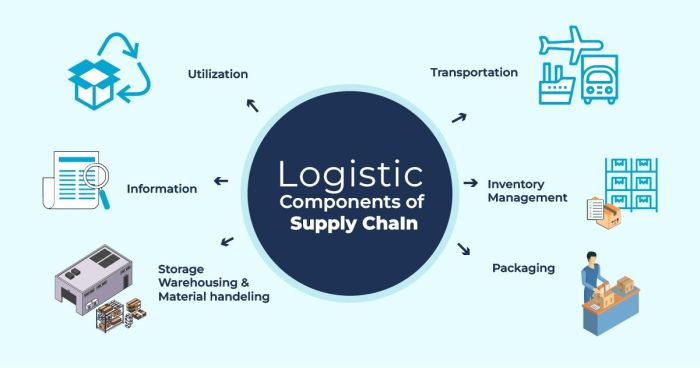
Effective transportation and distribution strategies are crucial for businesses to deliver goods and services efficiently and cost-effectively. A well-planned strategy considers various factors, including the type of goods being transported, the distance involved, the required delivery speed, and the budget constraints. Optimizing these elements can significantly impact a company’s bottom line, reducing operational costs and improving customer satisfaction.
Comparison of Transportation Modes
Choosing the right mode of transportation is a critical decision in logistics management. The selection depends on a careful balancing of cost, speed, and reliability, among other factors. The following table compares four common modes: road, rail, air, and sea.
| Mode | Cost | Speed | Reliability |
|---|---|---|---|
| Road | Generally moderate, can vary significantly based on distance and fuel prices. Often most cost-effective for shorter distances and smaller shipments. | Relatively fast for shorter to medium distances, flexible routing. | High for shorter distances, subject to traffic congestion and weather delays. |
| Rail | Lower cost per unit than road for long distances and large shipments. | Slower than road and air, but faster than sea for long distances. | High reliability for scheduled routes, less susceptible to traffic congestion. |
| Air | Highest cost per unit, but fastest delivery time. | Fastest mode of transportation. | High reliability for scheduled flights, but susceptible to weather disruptions. |
| Sea | Lowest cost per unit, ideal for large volumes of goods. | Slowest mode of transportation. | Relatively high reliability for scheduled routes, but susceptible to weather and port congestion. |
Optimizing Transportation Routes and Schedules
Optimizing transportation routes and schedules involves leveraging technology and strategic planning to minimize delivery times and costs. This includes using route optimization software to identify the most efficient paths, considering factors like traffic patterns, road closures, and delivery windows. Consolidating shipments to maximize truck capacity and implementing just-in-time delivery systems can also significantly improve efficiency. Regularly reviewing and adjusting routes based on performance data ensures continuous improvement.
For example, real-time tracking and GPS technology allow for immediate responses to unforeseen delays or changes in traffic conditions, minimizing disruptions to the delivery schedule.
Case Study: Efficient Transportation Management and Profitability
A hypothetical example illustrates the impact of efficient transportation management. Consider a national retailer, “RetailCo,” that previously relied on a less-optimized transportation strategy. They used a mix of transportation modes without a clear strategy, leading to inconsistent delivery times and high transportation costs. After implementing a route optimization system and consolidating shipments, RetailCo reduced its transportation costs by 15% within six months.
This reduction, combined with improved on-time delivery rates leading to increased customer satisfaction and reduced stockouts, resulted in a significant increase in overall profitability. This demonstrates the potential for substantial financial gains from investing in and optimizing transportation management strategies.
Warehouse Management and Optimization
Effective warehouse management is crucial for efficient logistics. A well-designed and managed warehouse minimizes operational costs, improves order fulfillment speed, and enhances overall supply chain performance. This section delves into the key aspects of warehouse optimization, focusing on design, layout, and the implementation of Warehouse Management Systems (WMS).
Efficient Warehouse Design and Layout
Optimal warehouse design prioritizes efficient material flow, maximizing space utilization while ensuring worker safety. The layout should be strategically planned to minimize travel distances for both goods and personnel. Consideration should be given to factors such as product volume, frequency of access, and the types of equipment used. A common approach involves a U-shaped or I-shaped layout to facilitate a streamlined workflow.
High-density storage solutions, such as narrow aisle racking or automated storage and retrieval systems (AS/RS), can significantly increase storage capacity in limited space. Safety is paramount; clear walkways, adequate lighting, and appropriate safety signage are essential to prevent accidents and ensure a productive work environment.Imagine an optimal warehouse layout: The receiving dock is located at one end, allowing for the efficient unloading of incoming goods.
From there, a clearly defined pathway leads to the storage area, which is organized according to product type and frequency of access. Fast-moving items are stored in easily accessible locations, while slower-moving items are placed further back. Picking areas are strategically positioned to minimize travel time for order fulfillment. Shipping docks are situated at the opposite end of the warehouse, enabling a smooth and efficient dispatch process.
The entire layout is designed to facilitate a smooth, unidirectional flow of goods, minimizing cross-traffic and maximizing efficiency. Aisles are wide enough to accommodate material handling equipment safely, and clearly marked safety zones are in place.
Warehouse Management Systems (WMS)
Warehouse Management Systems (WMS) are software applications designed to optimize warehouse operations. They provide real-time visibility into inventory levels, location, and movement, enabling efficient management of storage, picking, packing, and shipping processes. Different WMS functionalities cater to varying warehouse needs. Some systems offer basic inventory tracking and order management, while others include advanced features such as automated guided vehicle (AGV) control, labor management, and integration with other supply chain software.
The choice of WMS depends on the specific requirements of the warehouse, including size, complexity, and the level of automation. Examples of WMS functionalities include inventory control, order management, task management, reporting and analytics, and integration with other systems (e.g., Enterprise Resource Planning (ERP) systems).
Improving Warehouse Efficiency with WMS Implementation
Implementing a WMS can significantly enhance warehouse efficiency and reduce operational costs. By providing real-time data and automating processes, WMS minimizes human error, streamlines workflows, and improves accuracy. For instance, automated picking and packing processes reduce labor costs and improve order fulfillment speed. Real-time inventory tracking helps prevent stockouts and overstocking, optimizing inventory levels and reducing storage costs.
Advanced analytics provided by the WMS offer valuable insights into warehouse performance, enabling data-driven decision-making to further optimize operations. A well-implemented WMS can lead to significant improvements in key performance indicators (KPIs) such as order accuracy, inventory turnover, and overall warehouse productivity. For example, a study by a leading logistics consulting firm found that companies using WMS experienced an average of 20% reduction in labor costs and a 15% increase in order fulfillment speed.
The Impact of Technology on Efficient Logistics Management
The integration of technology is rapidly transforming logistics management, driving efficiency and optimizing operations across the supply chain. From warehouse automation to predictive analytics, technological advancements are streamlining processes, reducing costs, and enhancing overall responsiveness to market demands. This section will explore the significant contributions of emerging technologies and data analytics, alongside the challenges and opportunities presented by this technological evolution.The Role of Emerging Technologies in Improving Logistics EfficiencyEmerging technologies like artificial intelligence (AI), machine learning (ML), and blockchain are revolutionizing logistics.
AI-powered systems can optimize routing, predict demand fluctuations, and automate warehouse tasks, leading to significant cost savings and improved delivery times. Machine learning algorithms analyze vast datasets to identify patterns and predict potential disruptions, enabling proactive mitigation strategies. Blockchain technology enhances transparency and security within the supply chain, providing real-time tracking and traceability of goods, reducing the risk of fraud and improving accountability.
For instance, a large e-commerce company might use AI to optimize delivery routes based on real-time traffic data, resulting in faster delivery and reduced fuel consumption. Similarly, a manufacturer could employ blockchain to track the origin and movement of raw materials, ensuring product authenticity and compliance with ethical sourcing standards.
Data Analytics for Identifying Areas for Improvement in Logistics Operations
Data analytics plays a crucial role in identifying bottlenecks and inefficiencies within logistics operations. By analyzing data from various sources, such as transportation management systems (TMS), warehouse management systems (WMS), and customer relationship management (CRM) systems, companies can gain valuable insights into their operations. For example, analyzing delivery data can reveal patterns of delays, identifying specific routes or transportation modes that require optimization.
Analyzing warehouse data can pinpoint areas where inventory management processes are inefficient, leading to improved storage strategies and reduced storage costs. A detailed analysis of customer data can reveal demand patterns and predict future needs, allowing for proactive inventory management and improved order fulfillment. This data-driven approach allows for continuous improvement and optimization of logistics processes.
Challenges and Opportunities Associated with Adopting New Technologies in Logistics Management
The adoption of new technologies in logistics presents both challenges and opportunities. High initial investment costs for new technologies, the need for skilled personnel to manage and maintain these systems, and potential integration complexities with existing systems represent significant challenges. However, the potential for increased efficiency, reduced costs, improved customer satisfaction, and enhanced competitiveness outweigh these challenges. The successful integration of new technologies requires a strategic approach, including careful planning, investment in training and development, and a phased implementation strategy.
Furthermore, the ongoing development and refinement of these technologies promise even greater efficiency and innovation in the future, creating new opportunities for companies to gain a competitive edge in the logistics industry. For example, the adoption of autonomous vehicles could drastically reduce transportation costs and improve delivery times, but requires substantial infrastructure investment and regulatory changes.
In conclusion, mastering efficient logistics management is not merely a matter of operational efficiency; it’s a strategic imperative for businesses seeking sustainable growth and market leadership. By implementing the strategies and technologies discussed, companies can significantly reduce costs, enhance responsiveness to market demands, improve customer satisfaction, and ultimately bolster their bottom line. The journey toward optimized logistics is an ongoing process of continuous improvement, requiring adaptability, innovation, and a commitment to data-driven decision-making.
Embracing these principles will pave the way for a more streamlined, resilient, and profitable future.
Clarifying Questions
What is the role of risk management in efficient logistics?
Risk management is crucial. It involves identifying potential disruptions (e.g., natural disasters, supplier issues) and developing contingency plans to mitigate their impact on delivery times and costs. This includes things like diversification of suppliers and having backup transportation options.
How can I measure the ROI of improved logistics?
Measure ROI by tracking key metrics like reduced inventory holding costs, faster delivery times, lower transportation expenses, and improved order fulfillment rates. Compare these figures before and after implementing logistics improvements to quantify the financial benefits.
What are some common pitfalls to avoid in logistics management?
Common pitfalls include inadequate planning, insufficient technology adoption, poor communication among stakeholders, lack of real-time visibility, and neglecting data analysis for continuous improvement.