
Real-time logistics management revolutionizes how businesses handle their supply chains. By leveraging cutting-edge technologies like the Internet of Things (IoT), GPS tracking, and artificial intelligence (AI), companies gain unprecedented visibility into their operations. This allows for proactive decision-making, leading to increased efficiency, reduced costs, and enhanced customer satisfaction. This exploration delves into the core principles, enabling technologies, benefits, challenges, and future trends shaping this dynamic field.
From optimizing delivery routes using GPS data to predicting potential disruptions with AI-powered analytics, real-time logistics offers a powerful toolkit for navigating the complexities of modern supply chains. We’ll examine successful case studies, showcasing the transformative impact of this approach across various industries and consider the interplay between efficient logistics and a company’s overall financial health.
Technologies Enabling Real-Time Logistics
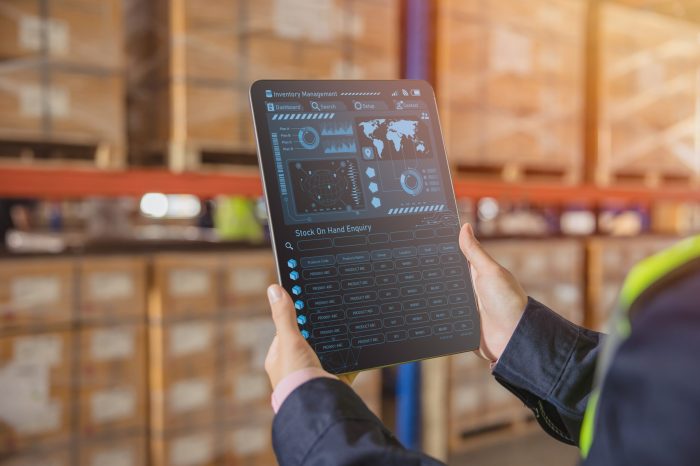
Real-time logistics relies heavily on a convergence of advanced technologies to achieve its goals of enhanced visibility, efficiency, and responsiveness. These technologies work in concert to provide a comprehensive view of the supply chain, enabling proactive decision-making and optimized resource allocation. The integration of these systems is crucial for maximizing the benefits of real-time logistics.
The Role of IoT Devices in Real-Time Tracking and Monitoring
The Internet of Things (IoT) plays a pivotal role in real-time logistics by providing continuous data streams from various points within the supply chain. Sensors embedded in shipping containers, vehicles, and even individual products transmit location, temperature, humidity, and other relevant data to a central platform. This constant flow of information allows for precise tracking of goods, enabling proactive identification and mitigation of potential issues such as delays, damage, or theft.
For example, a temperature sensor on a refrigerated truck carrying pharmaceuticals continuously monitors the internal temperature, alerting logistics managers to any deviations from the required range, allowing for immediate corrective action and preventing spoilage.
The Application of GPS Technology and its Impact on Delivery Optimization
GPS technology forms the backbone of real-time tracking and location-based services. By leveraging GPS signals, logistics providers can pinpoint the exact location of assets, vehicles, and shipments in real-time. This granular level of visibility enables route optimization, efficient fleet management, and improved delivery scheduling. GPS data, integrated with traffic information and other contextual data, allows for dynamic route adjustments, minimizing delays and improving delivery times.
For instance, a delivery company might reroute a vehicle around a traffic jam, ensuring timely delivery despite unexpected circumstances.
The Use of AI and Machine Learning Algorithms in Predictive Logistics
Artificial intelligence (AI) and machine learning (ML) algorithms are transforming predictive logistics, enabling businesses to anticipate potential disruptions and optimize their operations proactively. These algorithms analyze historical data, real-time information, and external factors such as weather patterns and economic indicators to forecast demand, predict potential delays, and optimize inventory levels. For example, a retailer using AI might predict a surge in demand for a particular product based on social media trends and weather forecasts, allowing them to proactively adjust their inventory and distribution strategy.
Big Data Analytics and Enhanced Decision-Making in Real-Time Logistics
Big data analytics plays a critical role in extracting actionable insights from the massive amounts of data generated by IoT devices, GPS systems, and other sources. By analyzing this data, logistics managers can identify patterns, trends, and anomalies that impact efficiency and performance. This data-driven approach enables informed decision-making, leading to improvements in route planning, inventory management, and overall supply chain optimization.
For example, analyzing historical delivery data might reveal specific time slots or routes consistently prone to delays, allowing logistics managers to adjust schedules or routes accordingly, improving overall delivery performance.
Liquidity Management and its Interplay with Logistics Management
Effective liquidity management is crucial for business survival and growth. It ensures a company has sufficient readily available cash to meet its short-term obligations, seize opportunities, and withstand unexpected financial challenges. This is intrinsically linked to logistics management, as efficient logistics directly impacts a company’s cash flow and working capital.Efficient logistics management significantly impacts a company’s liquidity by optimizing the flow of goods and funds.
Reduced inventory holding costs, faster payment cycles from customers, and minimized transportation expenses all contribute to improved cash flow. Conversely, inefficient logistics can lead to increased storage costs, delayed payments, and higher transportation expenses, ultimately straining a company’s liquidity. This interplay underscores the importance of integrating logistics and finance strategies for optimal financial health.
The Relationship Between Logistics KPIs and Liquidity KPIs
Several key performance indicators (KPIs) are used to measure the effectiveness of both liquidity and logistics management. While distinct, these KPIs are interconnected and influence each other. For example, improved inventory turnover (a logistics KPI) directly contributes to lower inventory holding costs and faster cash release, positively impacting liquidity ratios (liquidity KPIs).
| Liquidity KPI | Description | Impact of Efficient Logistics |
|---|---|---|
| Current Ratio | Current Assets / Current Liabilities | Improved inventory turnover reduces current assets, potentially lowering the ratio but also freeing up cash. |
| Quick Ratio | (Current Assets – Inventory) / Current Liabilities | Faster inventory turnover reduces inventory, improving this ratio and freeing cash. |
| Cash Conversion Cycle (CCC) | Days Inventory Outstanding + Days Sales Outstanding – Days Payable Outstanding | Reduced DIO through efficient logistics directly shortens the CCC, improving liquidity. |
| Logistics KPI | Description | Impact on Liquidity |
|---|---|---|
| Inventory Turnover | Cost of Goods Sold / Average Inventory | Higher turnover means less capital tied up in inventory, improving cash flow. |
| On-Time Delivery Rate | Percentage of orders delivered on time | Improved on-time delivery leads to faster payments from customers, improving cash flow. |
| Transportation Costs | Total cost of transporting goods | Lower transportation costs directly improve profitability and cash flow. |
Examples of Improved Logistics Leading to Improved Cash Flow
A company that implements a just-in-time (JIT) inventory system, reducing its reliance on large warehousing and inventory holdings, will experience a significant decrease in storage costs and working capital needs. This freed-up capital can then be used to invest in other areas of the business or to improve liquidity. Similarly, a company that optimizes its transportation routes and utilizes efficient freight management software can significantly reduce its transportation costs, leading to improved profit margins and enhanced cash flow.
For example, a retailer who switches from less efficient LTL (Less-Than-Truckload) shipping to FTL (Full Truckload) for bulk orders could see a considerable reduction in transportation costs, thereby boosting cash flow. The reduction in lead times through optimized logistics also allows for faster order fulfillment and quicker payment collection from customers, further accelerating cash flow.
In conclusion, real-time logistics management represents a significant advancement in supply chain optimization. By embracing innovative technologies and data-driven insights, businesses can achieve greater efficiency, resilience, and profitability. While challenges remain, particularly concerning data security and the ethical implications of real-time data usage, the potential benefits are undeniable. The future of logistics is undeniably real-time, promising further advancements and opportunities for growth.
FAQ
What is the return on investment (ROI) for implementing real-time logistics?
ROI varies greatly depending on the specific solution and company needs. However, benefits such as reduced transportation costs, improved inventory management, and faster delivery times can significantly increase profitability.
How does real-time logistics improve customer satisfaction?
Real-time tracking allows for proactive communication with customers regarding delivery updates, reducing uncertainty and improving the overall shipping experience. Faster delivery times and accurate order information also contribute to higher satisfaction.
What are the security risks associated with real-time logistics data?
Security risks include data breaches, unauthorized access, and potential misuse of sensitive information. Robust security measures, including encryption and access controls, are crucial to mitigate these risks.
What are some examples of IoT devices used in real-time logistics?
Examples include GPS trackers, RFID tags, smart sensors on vehicles and in warehouses, and wearable devices for workers.


